How to Create Effective Automated Email Sequences
Email sequences (also called drip campaigns or email workflows) start after a user action, move the subscriber through the funnel, and strengthen interest in the product through precise timing, segmentation, and content tailored to the stage of interaction. The emails themselves typically focus on product value, case examples, social proof, and special offers.
Why Use Email Sequences in Campaigns?
- Warming up the sales funnel. Instead of a single mass mailing, sequences guide the user step by step through the funnel and keep reminding them about the company. For example, an abandoned cart email series brings a customer back to a forgotten order. According to analytics, more than half of consumers (52%) have made a purchase after receiving a marketing email. Email sequences focus on these repeated touchpoints.
- Marketing automation. Once the scenario is configured, emails are sent automatically without manual involvement, which saves time and resources. Email sequences react to triggers automatically.
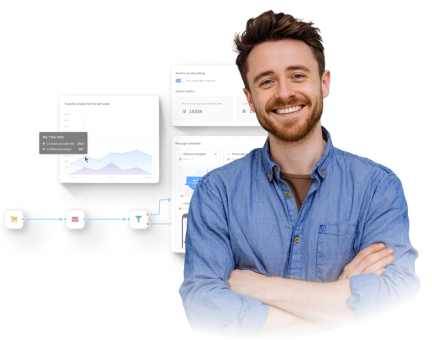
- Personalization and loyalty. For example, on the Altcraft platform, email sequences work as follows: the system tracks specific user actions — registration, viewing a product, adding an item to the cart without completing a purchase, or long periods of inactivity. Based on these events, an automated scenario starts, where each contact receives a sequence of steps: trigger check → segmentation by interests, deal stage, traffic source, and purchase history → sending an email with content adapted to the specific segment. Then, depending on whether the user performs the expected action, the scenario moves them to another path.
- Solving strategic tasks. A series of emails can reduce churn and increase the average order value. For example, reactivation sequences with personalized offers bring inactive customers back, while post-purchase emails (with recommendations or thank-you messages) increase loyalty. Personalized email sequences help address specific business goals: reducing payment drop-offs, increasing repeat purchases, and expanding content reach.
What Types of Email Sequences Are There?
- Trigger-based sequences. These start automatically after user actions: subscribing, making a purchase, viewing a product, or inactivity. This is the general mechanism behind most scenarios. For example, a registration confirmation email or a welcome series is a specific case of a trigger-based sequence.
- Welcome sequences. Sent immediately after a user subscribes to a newsletter or registers. Usually a series of 2–4 emails. In these sequences, the brand thanks the subscriber and introduces its key benefits and the format of future emails. Welcome sequences establish the first positive connection and encourage the first purchase.
- Sales and promotional sequences. Launched during marketing campaigns or when new products are released. This is a series of emails designed to explain a product or promotion in detail and encourage a purchase. These emails often include promo codes, special offers, and customer reviews. They help convert newsletter readers or blog subscribers into customers.
- Abandoned cart sequences. A specific type of trigger-based sequence: if a customer adds a product to the cart but does not complete the purchase, they receive a series of reminders. The first emails simply remind them about the product, while later ones may offer a discount or bonus. Such sequences often lead to completed purchases. According to research by Baymard Institute, about 70% of carts are abandoned. Timely reminders help move the customer toward completing the payment.
- Post-purchase sequences. After an order is placed, customers receive thank-you messages, product usage instructions, and suggestions for accessories or cross-sell items. The goal is to increase the perceived value of the purchase and encourage repeat orders. These emails strengthen loyalty — satisfied customers are more likely to return for another purchase.
- Reactivation sequences. When a user has been inactive for a long time, a sequence of emails is launched with a personalized offer or a gentle “We miss you” message. The goal is to restore interest among people who have already interacted with the brand instead of spending the budget on acquiring new customers.
Businesses can combine these templates. For example, email sequences may differ depending on the stage of the sales funnel: separate flows can be built for new subscribers, engaged audiences, and loyal customers. A well-designed email system is usually configured as a logical diagram: “trigger → email 1 → email 2 → …” with branches based on user actions. This ensures that subscribers receive emails only at relevant moments. If they complete the target action, the sequence can stop to avoid sending unnecessary messages.
How to Create Email Sequences
To set up an effective sequence, marketers usually go through several steps:
Conclusion
Email sequences create a controlled process for moving an audience through the funnel, from the first interaction to repeat purchases. With triggers and segments, communication becomes precise, and content stays relevant at every stage.
Automated scenarios reduce the workload for the team and provide consistent touchpoints with customers. When configured correctly, emails remain relevant: offers, recommendation blocks, and key arguments adapt to a person’s actions and interests.
The effectiveness of sequences is easy to measure: open rates, clicks, transitions between steps, and the speed of engagement. These metrics show clearly what works and what needs improvement.
As a result, the brand gets a tool that consistently increases the value of each lead and retains customers longer than isolated one-time email campaigns.